Millioner Registration, KYC and Account Verification
 Available in AU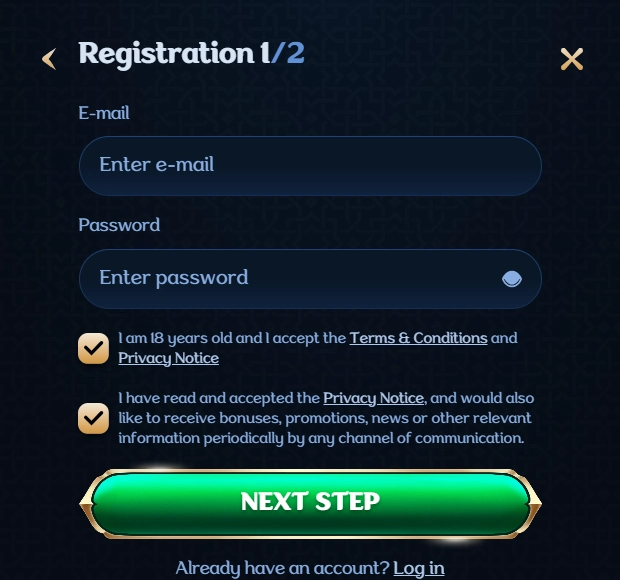
Contents
Millioner can ask for KYC evidence that establishes identity, residence and ownership of the payment method used on the account. The exact documents requested are case-dependent, so there is no reliable universal checklist that applies to every player. The useful way to think about verification is as an account lifecycle: the details entered at sign-up need to remain consistent with payment ownership and any later withdrawal checks.
In Australia, accurate personal details and payment records in the account holder’s name reduce friction when a verification request arrives before withdrawal processing. KYC completion time remains case-specific because document reviews vary and the published Terms establish no universal completion time for every account.
What Millioner can verify
Millioner’s published Terms identify three central KYC categories: identity, residence and payment-method evidence. These are not three separate account types. They are different parts of the same due-diligence process, allowing the operator to compare the person who opened the account with the person funding it and requesting a withdrawal.
Identity evidence is about establishing who owns the account. Residence evidence is about confirming the address or country information attached to that account. Payment-method evidence is about showing that the card, bank account or other funding route belongs to the same person. The Terms also connect payment ownership to transaction checks, which is why KYC should not be treated as a task that begins only after a withdrawal is requested.
The exact evidence requested can vary. The published evidence supports document categories, while the exact items requested can vary by account. If support asks for a specific item, follow the request shown in the account or provided by the official support channel.
Registration is the first verification layer
The public AU site currently exposes Register and Log in entry points. Registration is where the account’s core details are created, and those details become the reference point for later checks. A spelling difference, outdated address or payment method in another person’s name can create friction because the account record and transaction trail no longer line up cleanly.
The practical rule is simple: enter real details that you can support later. Use one legal identity, keep the account name aligned with payment ownership, and treat deposit acceptance and ownership verification as separate steps. Deposits and verification are separate controls. A payment can technically complete while the account still requires ownership evidence before a withdrawal is approved.
Registration also connects to bonus and product access, but those topics have their own pages. Broader product context is available in the Millioner Australia review. The focus is account data, identity checks, support and the path from sign-up to a verified withdrawal request.
Why payment ownership matters
Millioner’s Terms require the payment method used to fund the account to belong to the account holder. That rule matters because a casino account combines identity information with financial transactions. When the names or ownership trail do not match, the operator can ask for evidence before processing money out of the account.
A sensible record-keeping routine is to keep the confirmation of the deposit route, the transaction date and any reference number supplied by the payment provider. You should not send extra personal data before it is requested, but keeping your own records makes it easier to respond if Millioner asks you to demonstrate ownership or explain a transaction.
This interaction is covered in more detail on the Millioner withdrawals Australia. The key account-level point is that KYC and payments are not independent systems. The account name, country or residence information and payment ownership form one evidence chain.
When verification can affect withdrawals
A withdrawal request can trigger or expose outstanding verification work. Withdrawal checks vary by case, and verified status alone cannot establish a universal payout time. Internal review, payment routing and external provider settlement are different stages.
If a withdrawal is pending and support asks for KYC, address the verification request first because it can be part of the payout process. Check that the request came through Millioner’s own account interface, live chat or official support address. Then provide only the evidence that is actually requested, in the format requested, and keep a copy of what you sent.
For people trying to diagnose a delay, separate the questions. Is the account verified? Is payment ownership clear? Has the finance team accepted the withdrawal? Has the external method received the funds? This sequence is more useful than a single payout-speed label because it shows where a problem can occur.
What to expect from KYC timing
Millioner’s Terms contain timing language for account checks, but the duration of a KYC review can depend on the request and the supporting documents. No single completion figure should be treated as a universal promise for every account. Check the latest official Terms and any account-specific message for the requirement that applies to your case.
KYC still has a published timing framework even though no single completion time applies to every account. The published material therefore supports a case-dependent timeline rather than one universal completion time. The safer practical expectation is that document review can take time and may take longer when the submission is incomplete or the account requires additional checks.
If timing is important to a decision, ask Millioner support for the current status of the specific verification request. That is more useful than relying on a general number that might not describe your case.
Support routes for account problems
Millioner’s current AU site exposes Live Chat, and the official About page lists the support email as [email protected]. These are the two support routes confirmed by the current public site. No phone number is listed here because one has not been independently verified.
Use live chat for issues that can be discussed while you are logged in, such as locating the verification area or understanding what a status message means. Email is better when the issue needs a written trail, especially if support asks for account-specific follow-up. Never post identity or payment documents in public forums or send them to addresses copied from an unofficial review.
If a support message asks for a document, check the domain and compare the request with what is visible inside the Millioner account. The objective is to respond to the official request while limiting personal data to what support actually requests.
Account closure and self-exclusion are different controls
Closing an account and self-excluding are not the same decision. Account closure is an account-management action. Self-exclusion is a responsible-gambling control intended to restrict access for a chosen period or under the operator’s responsible-gambling process. Millioner’s official materials provide a support route for self-exclusion requests.
If gambling is becoming difficult to control, use the responsible-gambling route; ordinary account closure serves a different purpose. The public AU site also links to its Responsible Gaming section. Australian scheme membership or local exclusion coverage requires explicit verification for Millioner.
For broader licensing and Australian regulatory context, see the Millioner casino licence Australia. Account controls can exist at an operator level even when the regulatory framework applying in Australia is a separate question.
A practical KYC preparation checklist
- Use accurate registration details. Your account name and residence information should be information you can support later.
- Fund the account with your own payment method. Millioner’s rules connect payment ownership to account verification.
- Keep transaction references. A clear payment trail helps if ownership or activity is reviewed.
- Wait for the actual request before sending documents. Upload only identity material requested through the account or an official support channel.
- Check the official channel. Use the logged-in account, Live Chat or [email protected].
- Read each request literally. If Millioner asks for identity evidence, residence evidence or payment ownership, answer the specific request with the relevant documents.
- Separate KYC status from withdrawal settlement. Completing verification is one stage; payment processing and external settlement are later stages.
How mobile access changes the verification experience
Millioner is built for mobile-browser access, so registration, account navigation and support can be reached from a phone without a dedicated native app. That can make document handling convenient, but convenience should not lead to careless uploads. Use a private connection, check that you are on the official Millioner site, and avoid keeping sensitive copies in shared photo libraries or messaging apps longer than necessary.
The separate Millioner casino app explains the difference between browser access, the site’s Create Shortcut feature and a true iOS or Android app. The security consequence is straightforward: KYC material belongs only in official account or support channels.
Common mistakes that create avoidable friction
The first mistake is assuming that a successful registration means the account is fully verified. Registration creates the account; KYC can occur later. The second is using somebody else’s payment method and assuming that a deposit acceptance proves it is permitted. Ownership remains a separate issue. The third is sending a generic document set before knowing what the operator has asked for.
Another common mistake is mixing support complaints with regulatory claims. A request for extra verification may be inconvenient, but it does not by itself prove that an account is being treated unlawfully or that every user will face the same delay. Conversely, a smooth verification experience does not establish Australian licensing. Those are different questions and should be assessed with different evidence.
The strongest account strategy is therefore consistency: correct details at registration, payment methods in the same name, records kept for important transactions and prompt responses through verified support channels.
FAQ
Does Millioner require KYC?
Millioner’s official Terms allow identity, residence and payment-method evidence to be requested. The exact request is case-dependent.
Is there one fixed Millioner document checklist?
No universal checklist is published here. Document examples are limited to items supported by the published Terms because account-specific requests can vary.
Can KYC affect a withdrawal?
Yes. Verification and payment-ownership checks can be relevant before a withdrawal is processed or released.
How do I contact Millioner about verification?
The current site exposes Live Chat, and the official About page lists [email protected].
Is KYC completion time fixed?
No. Verification timing can depend on the documents requested and the complexity of the check, so a single fixed completion time would be inaccurate.
This material was created by the Millioner Australia Guide team.
Related posts

Millioner Reviews, Complaints and Reputation Signals
Millioner Withdrawals: AUD Limits, Timing and Checks