
Millioner Reviews, Complaints and Reputation Signals
 Available in AU
Contents
Recent third-party sources contain repeated complaints about withdrawal delays and support responses at Millioner, but user reports are evidence of individual experiences, not proof that every withdrawal is delayed or every customer receives the same treatment. The useful way to read the reputation record is to look for recurring themes, check dates and resolution status, and compare each theme with Millioner’s current published Terms.
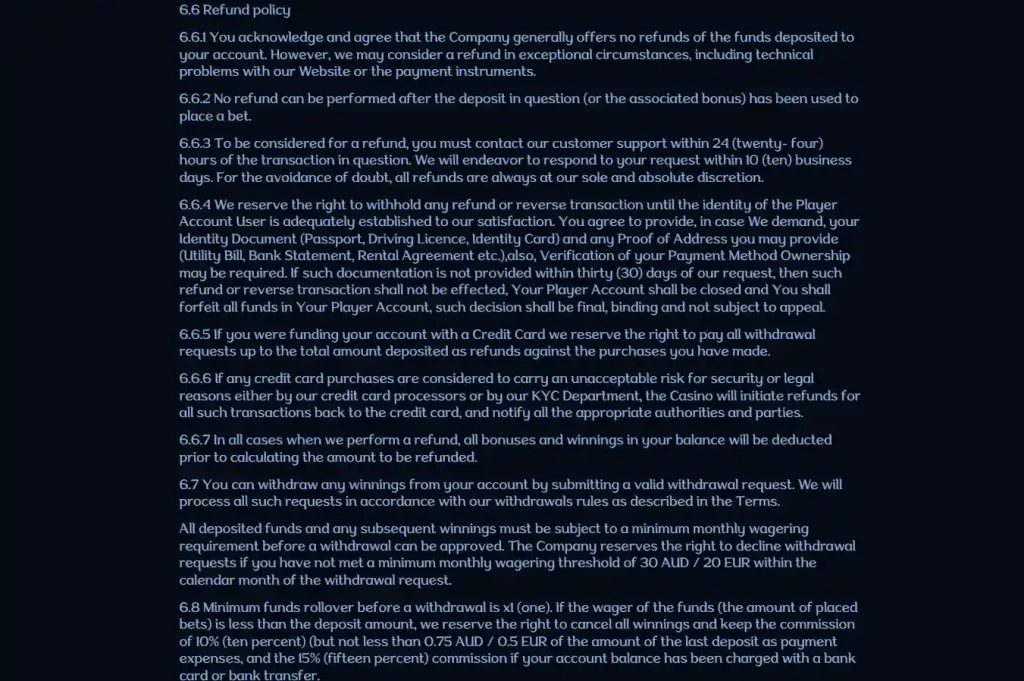
That comparison matters. Millioner’s Terms state that withdrawal requests are worked through by the finance department within three business days subject to conditions and checks, and the operator can request KYC evidence. A complaint describing a longer wait is therefore a signal to investigate, but the complaint itself does not establish why the delay occurred.
Evaluating Millioner complaints
Reputation pages are easy to make misleading because review platforms compress many different events into one score. The method uses four checks. First, it identifies the theme of a complaint: withdrawal, account access, support, self-exclusion or another issue. Second, it checks when the report was submitted. Third, it records whether a complaint platform marked the case resolved, unresolved, rejected or still open. Fourth, it compares the report with the operator’s current policy where that policy is known.
This method also avoids importing platform verdicts into the overall conclusion. A review site’s safety score or a Trustpilot TrustScore is a metric created by that platform. It can be mentioned as context, while safety claims require evidence beyond a platform metric. The more useful evidence is the underlying pattern of dated cases and how those cases ended.
The strongest current theme: withdrawal delays
Withdrawal delay is the clearest recurring complaint theme in current public material. Trustpilot reviews from 2026 include users describing waits beyond the timeline they expected, repeated status messages and difficulty obtaining a specific payment date. Casino Guru also lists Millioner cases involving delayed withdrawals, including both resolved and unresolved outcomes.
The record contains different outcomes and supports no universal claim that Millioner never pays or that every withdrawal is delayed. For example, Casino Guru has a case submitted in April 2026 about an €80 withdrawal that had been pending for more than a week; the complaint was later marked resolved. Other cases remain unresolved or open.
The correct conclusion is narrower: delayed-withdrawal reports are recurrent enough to deserve attention when evaluating Millioner, and the outcome varies by case.
Compare complaints with Millioner’s official withdrawal terms
Millioner’s current Terms say withdrawal requests are worked through by the finance department within three business days, subject to the relevant conditions and checks. The Terms also allow verification of identity, residence and payment-method ownership. Those rules create two different clocks that users can easily conflate: the internal processing window and any additional time caused by verification or the payment rail after approval.
If a reviewer says “I have waited ten days,” the report shows that the person’s experience exceeded three business days from their perspective. It does not automatically prove that the operator breached its own rule, because the public complaint may omit whether KYC was complete, whether the request was reversed, or whether a payment provider added time after approval.
For the detailed policy and AUD limits, see Millioner withdrawals Australia. The focus is reputation evidence; withdrawal tiers are covered separately.
Support complaints: generic replies and access to live chat
A second recurring theme is dissatisfaction with support communication during account or withdrawal problems. Several Trustpilot reviewers in 2026 describe repeated generic replies, unclear timelines or loss of access to live chat while a payment issue was ongoing. Casino Guru complaints also mention email and chat contact during disputes.
Separate that experience evidence from channel availability. Millioner’s official site exposes Live Chat, and its published support information includes [email protected]. The existence of those channels is verified. Whether a specific user receives a fast or useful answer is a different question, and review reports provide mixed evidence about that service quality.
A practical step is to keep a written record: date of withdrawal request, status records, KYC completion, chat transcript and email thread. That makes a later complaint easier to evaluate than a short review saying only that support was “bad.”
Account closure and self-exclusion reports
Current Casino Guru material also includes complaints about account closure and self-exclusion. One case submitted in July 2026 says the player requested permanent closure, later regained access and deposited again; Casino Guru eventually closed that complaint as unresolved after the casino stopped responding during mediation. Another current complaint entry concerns an account that the player says remained open after a closure request.
These are serious allegations, but they remain case-specific reports and complaint-platform findings. Available reports support case-specific concerns, not a universal conclusion about self-exclusion requests. The evidence supports a more precise statement: there are recent public complaints in which users allege failures around account closure or self-exclusion, including at least one case that Casino Guru marked unresolved.
The separate Australian regulatory scope also matters. BetStop covers Australian licensed online and phone wagering services; Millioner’s coverage remains unverified. The local licence analysis is on the Millioner casino licence Australia.
Why resolved complaints matter
A complaint list should not count only negative submissions. Resolution status changes the meaning of the evidence. A delayed withdrawal that is ultimately paid is different from an unresolved confiscation dispute, even though both may begin with a one-star review.
Casino Guru’s current Millioner profile includes resolved, unresolved, rejected and open complaints. That spread is more informative than a single headline number because case outcomes vary. Some users obtain a resolution after mediation; other cases close without agreement; some are rejected because the platform concludes the evidence does not support the player’s position.
When reading any complaint database, open the case itself before treating the title as the result. Titles are usually written at submission time, while the final status can change days or months later.
Why Trustpilot is useful but limited
Trustpilot is useful for recency and for spotting recurring language across many independent submissions. The current Millioner profile contains a large share of negative reviews, and several 2026 posts focus on withdrawal timing, support responsiveness or account handling.
But Trustpilot itself notes that reviews are opinions of individual users and that a profile’s reviews may not be representative. Reviewers are self-selected: people with unusually good or unusually bad experiences have more reason to post than users whose transaction completed routinely. Identity, account history, KYC state and the full dispute evidence are also rarely visible to people.
As a result, the TrustScore is treated as a signal rather than a safety verdict. It uses dated review text as one source of recurring themes and then checks those themes against complaint-resolution records and official policy.
Why complaint-platform findings are also limited
A mediation platform can provide more structure than a short consumer review because it may ask both sides for documents, track deadlines and publish a resolution status. Even so, it is not a court or gambling regulator. A closed or unresolved case shows the outcome of that mediation process, not a legal judgment.
Casino Guru’s complaint pages are particularly useful for dates and case progression. For Millioner, they show examples where a withdrawal complaint was resolved, others where cases were closed unresolved, and current cases that remain open. That is valuable reputation evidence and should remain attributed to the platform, with account-wide conclusions kept separate.
A practical complaint-evidence matrix
| Signal | What current sources show | How much weight to give it |
|---|---|---|
| Withdrawal delays | Repeated 2026 reports across Trustpilot and Casino Guru | Meaningful recurring theme; still case-specific |
| Support quality | Some users describe generic replies or difficulty getting updates | Useful service-quality signal; channel availability itself is separately verified |
| Resolved cases | At least some complaint cases end as resolved | Important counterweight to one-sided complaint counts |
| Unresolved cases | Current database includes unresolved Millioner disputes | Important risk signal; read the case facts and reason for closure |
| Star or safety scores | Platforms publish their own aggregate metrics | Context only, not proof of safety or wrongdoing |
What to document before escalating a withdrawal complaint
- Withdrawal request date and amount. Save the confirmation and current status.
- KYC status. Record when requested documents were supplied and whether verification was confirmed.
- Payment method. Note whether the withdrawal route matches the deposit method and whether the operator requested ownership evidence.
- Support contacts. Keep email threads and chat transcripts as the primary record of support contact.
- Terms version. Save the relevant terms as they existed during the dispute.
- Outcome. If the payment arrives or the account issue is fixed, update any public complaint so the record reflects the result.
This documentation also makes it easier to distinguish a payment-provider delay from an operator review or an unresolved account dispute.
How to interpret very strong language in reviews
Some public reviews use words such as “scam,” “fraud” or “criminal.” Those are the reviewer’s characterisations. Those labels remain the reviewers’ own characterisations. A strong label can reflect a genuine negative experience, frustration during a delay, missing context or a dispute that later changes status.
A better approach is to translate the label back into the underlying claim. If a public review says a withdrawal was pending for two weeks, the verifiable issue is the reported two-week delay. If it says support stopped replying, the issue is the claimed communication failure. Those concrete points can then be compared with policy and other cases.
What the current reputation record does support
The current evidence supports four practical observations. First, withdrawal delays recur across multiple recent user reports. Second, support communication is part of several complaints, particularly where users want a specific payment timeline. Third, complaint outcomes are mixed, with resolved, rejected, unresolved and open cases in the public record. Fourth, account-closure and self-exclusion allegations appear in recent complaint-platform material and deserve separate attention from ordinary payment delays.
What the evidence does not support is a universal conclusion that every customer will have the same experience. It also does not support treating a review-platform score as a substitute for licence verification. For the Australian regulatory position, use the dedicated licence and player-protection analysis.
How to weigh reputation evidence
If reputation is an important part of your decision, focus on the type of failure you care about most. For withdrawals, compare current complaint timing with the operator’s three-business-day processing statement and ask what happens when KYC or payment checks intervene. For support, look for evidence of useful resolution; the mere presence of live chat says little about outcome quality. For responsible-gambling controls, give extra weight to dated self-exclusion cases and how the operator responded.
Then combine reputation evidence with the other independent factors: Millioner casino bonus Australia, withdrawal rules, account verification and Australian regulation. No single star rating should carry that entire decision.
FAQ
Are there recent Millioner withdrawal complaints?
Yes. Current 2026 Trustpilot and Casino Guru material includes multiple user reports about delayed withdrawals. The outcomes differ by case, so the evidence supports recurring delay reports rather than a universal delay claim.
Have any Millioner complaints been resolved?
Yes. Casino Guru’s current database includes resolved Millioner cases as well as unresolved, rejected and open cases.
Does a low review score prove Millioner is unsafe?
No. An aggregate score is a platform metric. It can signal dissatisfaction, but a sound assessment also examines individual case details, recency, resolution status, official terms and licensing evidence.
What do Millioner’s Terms say about withdrawal processing?
The current Terms state that withdrawal requests are worked through within three business days, subject to conditions and checks. KYC and payment-method verification can also be required.
Should I trust a review calling Millioner a scam?
Treat the label as the reviewer’s opinion and inspect the concrete allegation underneath it. The relevant evidence centres on specific events such as delay length, support contact and case resolution, while sensational labels remain attributed to their original authors.
For the complete product overview, return to the Millioner Australia review.
This material was created by the Millioner Australia Guide team.
Related posts
Millioner Withdrawals: AUD Limits, Timing and Checks
Millioner Sportsbook in Australia